The room, from above
A spectator knows the room from one chair. I know all of it from one point, but the highest. Follow the beam.
The horseshoe
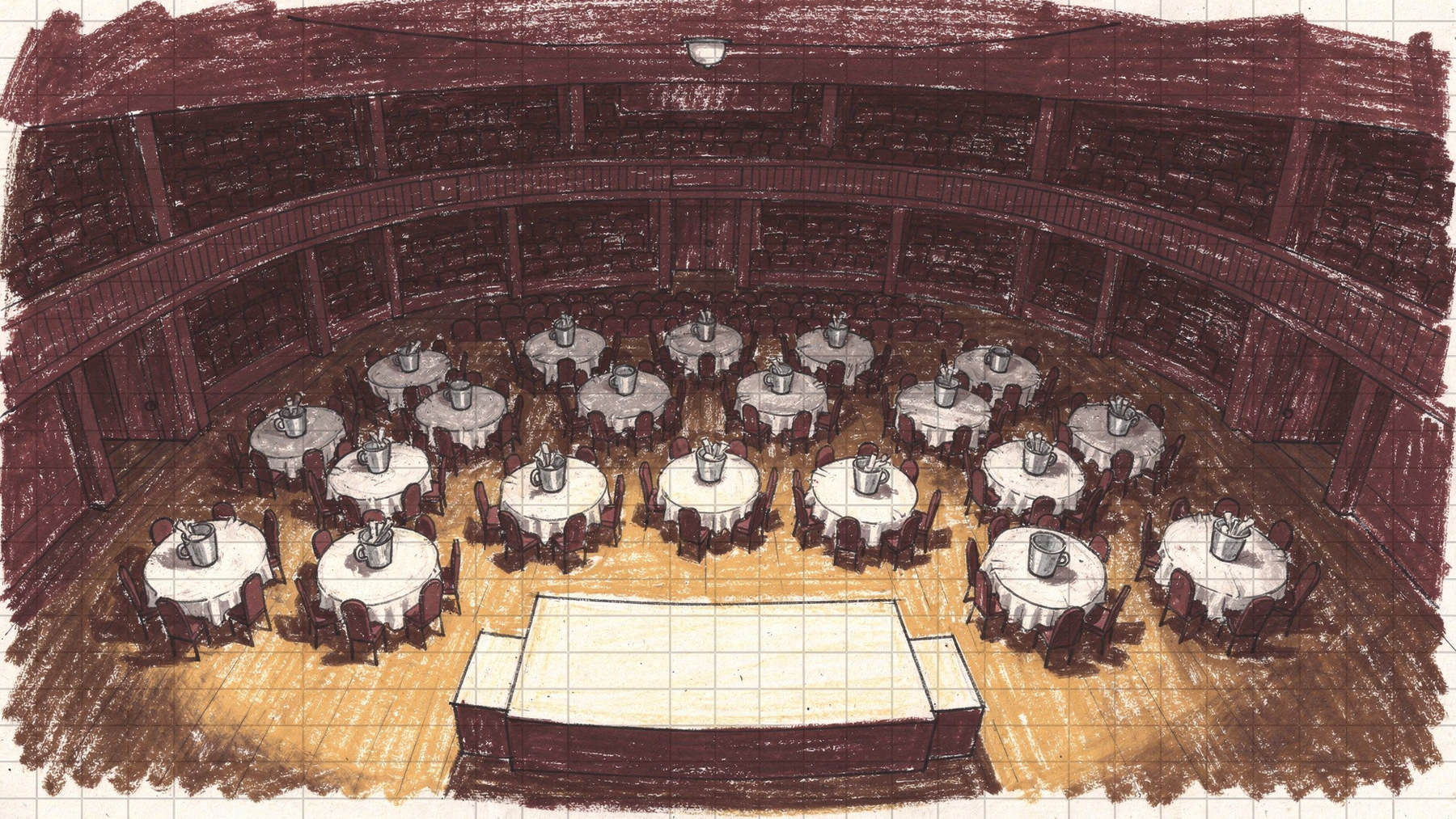
The stalls wrap round the stage in a horseshoe, its tips towards the wings. The tables are small and round, so close together that the waiters walk sideways, like crabs, and never once spilled a drink on anyone while I was watching. All right, once.
From above you hardly see the people: heads, shoulders, hands. You see the tablecloths. I read the evening off them: a stain, they’re enjoying themselves; a crease at the edge, somebody is worried and kneading the cloth.
The first row
Here you get the wind off the skirts. You see the seams of the stockings, hear the breathing, feel the boards. But from down there you can’t see the pattern: a line of twenty legs goes back to being twenty legs.
For your second time. The first, sit a little further back.
The middle, behind the front tables
My answer to everyone who asks. Your eye is level with the stage, the line reads whole, faces are still faces. This is exactly where I seated the spectator in my head when I was setting my beam.
The best place in the room, and I won’t argue about it.
The tips of the horseshoe
From the side you lose the symmetry, and symmetry is what holds a cabaret up. But you can see into the wings: that half-second when the artist is out of the light and hasn’t yet put her smile away. I’d have given a lot for those half-seconds.
For the curious, and for people who have been before.
Behind the column
The columns hold up the balcony, and each one throws a wedge of shadow into the room. It’s drawn dark on my plan. It’s easily done: the back rows, at an angle, and half the cancan is watched for you by your neighbour.
If they put you here, ask for another table at once, before the first glass. Politely. It works more often than not.
The balcony, facing the stage
The dark red scarf. From here you see the drawing of the dance almost as I saw it: the circles, the diagonals, the fan of people opening. Fewer faces, more design. And nobody will stand up in front of you with a glass.
The second happiest place, after the middle of the stalls.
The balcony, to the side
One edge of the stage is cut off and you have to crane your neck. But at the late show it’s a good place to be: dark, apart, with the glasses winking one by one in the half-light like windows in Montmartre.
For talking, just the two of you. Not for a first date with the revue.
And my booth
A metre and a half by two, a stool, a hook for the jacket. In summer it’s hotter under the dome than in a bakery; in winter only the lamp is warm. Someone before me had scratched on the wall, “Don’t breathe on the glass.” Underneath I added, “Or on them.”
No ticket was ever sold for this seat.
A word of warning
I drew this plan from memory and for atmosphere, without a tape measure. The tables may have moved since. And above all: you don’t choose your seat. The plan is redone every day and the maître d’ shows you to your table. I’ve written about how to live with that in the tips.